Answer Snapshot:
An autism-friendly or special-needs-aware pediatric dental visit should be planned around the child’s triggers, communication style, sensory preferences, medical history, and caregiver insight. Parents should share what helps, what escalates stress, and what safety considerations matter before the appointment.
For many children, a dental visit is not stressful because of one single thing. It may be the bright light, unfamiliar sounds, taste of toothpaste, feeling of gloves, sitting back in the chair, waiting too long, unexpected touch, or not knowing what will happen next. For children with autism, ADHD, sensory processing differences, anxiety, developmental delays, medical complexity, or previous dental trauma, planning matters.
Why special health care needs dental visits require more planning
The AAPD describes care for dental patients with special health care needs as an important part of pediatric dentistry. These needs may involve physical, developmental, mental, sensory, behavioral, cognitive, or emotional factors that require individualized planning. In real family terms, this means the dental visit should not be forced into a one-size-fits-all routine.
A thoughtful pediatric dental team asks questions before assuming what will work. Some children do better with a quick visit. Some need a visual schedule. Some need extra explanation. Some need fewer people in the room. Some need parent presence. Some need gradual desensitization over multiple short visits before a cleaning or treatment can happen comfortably.
Parent planning worksheet: what to tell the dental office before the visit
| Information to share | Examples | Why it helps |
| Communication style | Verbal, non-speaking, AAC device, gestures, short phrases, yes/no responses. | The team can choose the right words and pacing. |
| Sensory triggers | Bright lights, suction sounds, mint flavors, vibration, reclining chair, gloves, waiting room noise. | The team can reduce avoidable stressors. |
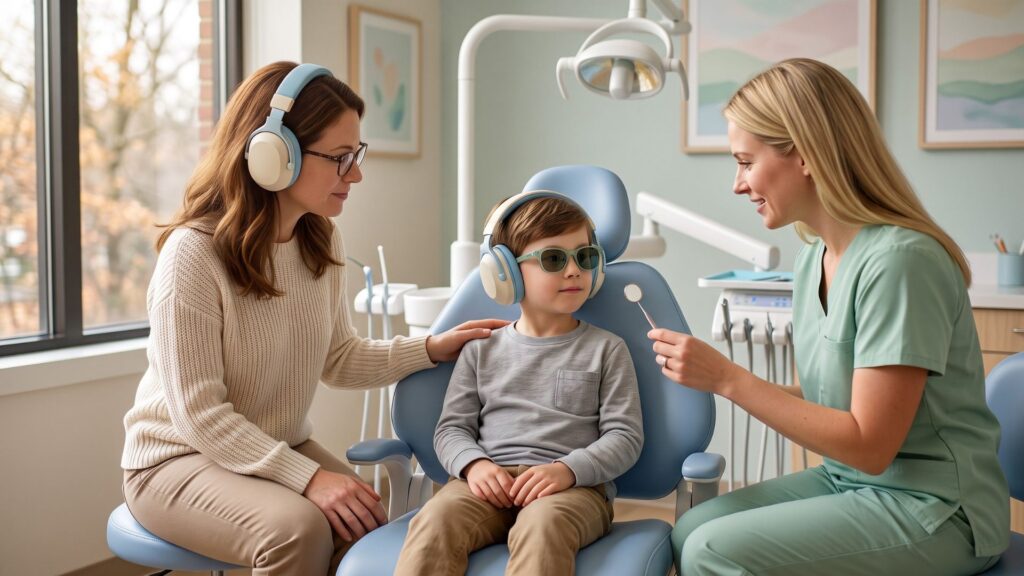
| Comfort tools | Headphones, sunglasses, weighted blanket, fidget item, tablet, favorite toy. | Familiar tools can help the child regulate. |
| Medical history | Seizures, heart conditions, airway concerns, medications, allergies, prior anesthesia, physician guidance. | Medical details can affect timing, sedation discussions, and safety planning. |
| Behavior history | Bolting, biting, gagging, panic, shutdown, aggression, refusal, previous trauma. | The office can plan staffing and avoid preventable escalation. |
| Successful strategies | First/then language, countdowns, modeling, social stories, rewards, breaks. | Repeating what already works builds trust faster. |
Before the appointment: how parents can prepare at home
Preparation does not need to be complicated. The best plan is predictable, visual, and positive. Practice opening the mouth for a few seconds. Count teeth with a toothbrush. Let your child wear sunglasses or headphones if those may help. Use a simple social story: We will go to the dentist. They will count your teeth. You can hold your toy. Then we go home.
Avoid using the appointment as a threat or a test of bravery. The goal is not to convince the child that nothing will happen. The goal is to make the visit predictable and safe enough that the child can participate as much as possible.
During the visit: what a sensory-friendly approach can include
- A slower introduction to the room, chair, mirror, toothbrush, and light.
- Tell-show-do explanations in simple language.
- Short breaks between steps.
- Parent presence when it helps the child feel safe.
- Alternative positioning when appropriate, such as knee-to-knee exams for very young children.
- A quiet tone, fewer sudden movements, and fewer unnecessary instructions.
- Permission-based choices, such as flavor choice, holding a mirror, or choosing which comfort item stays nearby.
Not every accommodation is possible in every clinical situation. A child with active pain, swelling, infection, trauma, or urgent treatment needs may require a different plan. The important point is that the parent, dentist, and team communicate openly about what is realistic and safe.
When sedation or general anesthesia enters the conversation
Sedation should not be presented as a shortcut for every nervous child. It is a clinical decision based on the child’s health, cooperation, anxiety level, treatment needs, safety considerations, and alternatives. Miles of Little Smiles has a sedation dentistry page and doctors with training backgrounds that include special needs care, sedation, and general anesthesia experience. This is useful trust-building information, but the article should avoid guarantees like pain-free, no memory, or no anxiety forever.
Safer wording for SEO content: some children may benefit from nitrous oxide, sedation, or general anesthesia when recommended after evaluation. Parents should receive a clear explanation of the reason, risks, benefits, alternatives, and aftercare instructions before making a decision.
After the visit: build continuity, not perfection
A successful special needs dental visit is not always a complete cleaning on the first try. Sometimes success is entering the office, sitting in the chair, letting the dentist count teeth, or leaving without a meltdown. The goal is to build continuity. A familiar dental home allows the team to learn the child’s cues and improve the plan over time.
Parents should ask what to practice before the next visit, what signs to monitor at home, and whether the next appointment should be short, early in the day, or scheduled with extra time. These small planning details can make a large difference.
Why local access matters for Westchester families
Families often delay dental care when every visit feels overwhelming or when the right provider is far away. A special-needs-aware pediatric dental home in White Plains can reduce travel stress and make it easier to schedule preventive care before issues become emergencies. Local continuity also helps the dentist monitor growth, enamel changes, oral habits, orthodontic signs, and treatment needs across years.
FAQ
What should I tell the dentist if my child has autism or sensory sensitivities?
Share triggers, communication preferences, comfort tools, medical history, previous dental experiences, and strategies that help your child regulate.
Can a pediatric dentist treat children with ADHD, autism, or developmental delays?
Many pediatric dentists are trained to care for children with special health care needs. Parents should ask about experience, behavior guidance, visit pacing, accommodations, and when sedation may or may not be appropriate.
Should I schedule a shorter visit for my child?
Some children benefit from shorter, earlier, or staged visits. The best option depends on the child’s needs and the reason for the appointment.
Can parents stay with their child during the visit?
Parent involvement can be helpful for many children, especially when the parent knows communication cues and triggers. Each office has its own clinical policies, so ask before the appointment.
Is sedation always needed for children with special needs?
No. Some children do well with behavior guidance and sensory support. Others may need nitrous oxide, sedation, or general anesthesia depending on the treatment and safety considerations. This decision should be individualized.
