Answer Snapshot:
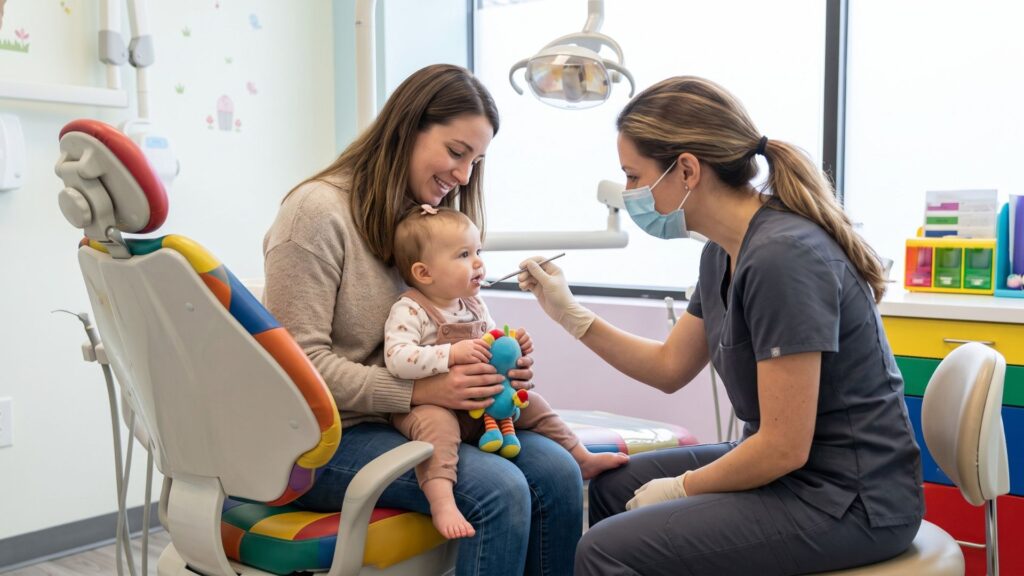
Your child should see a dentist after the first tooth appears and no later than the first birthday. The first visit is usually gentle and parent-focused: the pediatric dentist checks growth, screens for early cavity risk, answers feeding and brushing questions, and helps your child begin building comfort with dental care.
Many parents assume the first dental visit should happen around age three, when a child can sit still, follow instructions, and has most of their baby teeth. Pediatric dental guidance starts earlier. The first visit is not about doing a big cleaning. It is about prevention, parent coaching, and creating a dental home before a problem becomes painful.
For families in White Plains and Westchester, an age-one dental visit can answer the questions parents often search late at night: How much toothpaste should I use? Is it okay if my baby falls asleep with a bottle? Are these white spots normal? Should I worry about thumb sucking? What do I do if my toddler chips a tooth?
When should a baby go to the dentist for the first time?
The American Dental Association says the first dental visit should happen after the first tooth appears, but no later than the first birthday. The American Academy of Pediatric Dentistry also promotes early dental home care. In plain parent language: do not wait until every tooth is in, and do not wait until your child has pain.
This early timing surprises many parents, but it makes sense. Teeth can develop cavities soon after they erupt. Early visits help the dentist identify risk factors, explain brushing and feeding habits, and give parents a plan before small issues become more complicated.
What happens during a baby’s first dental visit?
The exact visit depends on the child’s age, comfort level, and health history, but a first pediatric dental visit often includes several parent-friendly steps.
| Part of visit | What parents can expect | Why it matters |
| Health and history review | The team asks about birth history, medications, allergies, feeding, brushing, bottles, pacifiers, thumb habits, and prior injuries. | Medical and daily routine details help the dentist personalize prevention. |
| Gentle mouth check | The dentist checks teeth, gums, tongue, lips, bite, enamel, oral habits, and development. | Early screening helps identify growth, cavity-risk, or trauma concerns. |
| Cavity-risk conversation | Parents discuss snacks, drinks, nighttime feeding, toothpaste use, and brushing challenges. | Cavities are preventable, but prevention needs to match the family’s real routine. |
| Parent coaching | Parents receive guidance on brushing, fluoride toothpaste, diet, teething, and what to watch for. | The caregiver does most of the prevention at this age. |
| Next-step plan | The dentist recommends follow-up timing based on risk and development. | Some children need routine monitoring; others need closer prevention. |
How to prepare your baby or toddler
Preparation should be calm and simple. Schedule the visit at a time of day when your child is usually rested. Bring a comfort item if it helps. Avoid scary words like shot, hurt, drill, or needle. You do not need to over-explain; babies and toddlers respond more to your tone than to detailed descriptions.
Parents should also prepare their own questions. The first visit is just as much for the caregiver as it is for the child. If brushing is a battle, say so. If your child snacks often, uses a bottle at night, resists toothpaste, has reflux, takes medication, or has had a fall, bring that up. The goal is not to judge the routine. The goal is to make the routine safer and more realistic.
What to bring to the first visit
- Your child’s medical history and medication list.
- Insurance information, if applicable.
- Any questions about toothpaste, bottles, pacifiers, thumb sucking, snacks, teething, or dental injuries.
- A comfort item if it helps your child feel settled.
- Photos of anything you noticed, such as white spots, chipped teeth, swelling, or bleeding, if the issue is not visible all the time.
Common questions parents ask at the age-one visit
How much fluoride toothpaste should I use?
The right amount depends on age and risk. The dentist can demonstrate a safe amount and explain how to brush when your child wiggles, bites the toothbrush, or resists help.
Is a bottle at bedtime really a problem?
Frequent exposure to milk, formula, juice, or other sugary liquids during sleep can raise cavity risk because liquid can sit around teeth for long periods. If your child has a bedtime bottle habit, the visit is a good time to create a gradual plan.
What if my baby only has one or two teeth?
That is normal. The first visit is not only about the number of teeth. It is about growth, prevention, feeding, brushing, oral habits, and giving parents a trusted dental home.
Will my child cry?
Some babies and toddlers cry during medical or dental checks, and that does not mean the visit failed. A good pediatric dental team keeps the visit gentle, efficient, and reassuring while helping parents understand what is happening.
Why early visits help prevent dental anxiety
Children who first meet the dentist only during pain or treatment may associate the dental office with stress. Early preventive visits can make the office feel familiar before anything urgent is needed. The child learns the faces, sounds, chair, mirror, toothbrush, and routine. Parents also learn who to call when something changes.
This is especially valuable for families who want a long-term pediatric dental home in White Plains. If an emergency happens later, the office already knows the child’s history and baseline behavior.
FAQ
What age should my baby see a dentist?
Your baby should see a dentist after the first tooth appears and no later than the first birthday.
What happens at a baby’s first dental visit?
The dentist usually checks growth and tooth development, screens for early cavity risk, reviews health and feeding habits, gives brushing and fluoride guidance, and answers parent questions.
Does my baby need a cleaning at the first visit?
The first visit may include gentle cleaning or fluoride guidance depending on age, tooth eruption, and risk. For many babies, the most important part is the exam and parent coaching.
How can I help my toddler stay calm at the dentist?
Choose a rested time of day, keep your language positive and simple, bring a comfort item, and avoid overexplaining. A pediatric dental team can help pace the visit.
Can baby teeth really get cavities?
Yes. Baby teeth can develop cavities soon after they appear, especially with frequent sugar exposure, nighttime bottles, or brushing challenges. Early guidance helps reduce risk.
