
A chipped baby tooth can happen in an instant. Your child trips on the playground, bumps into a table corner, or falls off a bike. The moment you see blood or a broken tooth, the clock starts. Most parents feel a rush of adrenaline and uncertainty at the same time. Is this a real child dental emergency, or can it wait until morning? The answer depends on a few specific signs you can check right now, before you even leave the house.
This guide walks you through exactly what to do for a chipped baby tooth in the first 30 minutes. You will learn how to assess the injury, when to call for same-day care, and what steps to avoid that could make things worse. The pediatric dental team at Miles of Little Smiles created this resource so that parents can act with confidence, stay calm, and give their child the best possible outcome after a broken baby tooth.

First 3 Checks: Bleeding, Looseness, Pain, Soft-Tissue Injury
Before you decide how urgent the situation is, perform a quick visual and tactile assessment. These four checkpoints take less than 60 seconds and give you the information you need to triage the baby tooth injury at home.
- Bleeding:
Look inside and around the mouth. Determine whether blood is coming from the gum tissue, the lip, or the tooth itself. Steady bleeding that does not slow after two minutes of gentle pressure may indicate a deeper laceration.
- Looseness:
With clean hands, gently wiggle the affected tooth. A tooth that shifts in any direction or feels “wobbly” beyond its normal range suggests root involvement or damage to the surrounding bone.
- Pain level:
Ask your child to point to where it hurts most. Sharp pain on breathing in (sensitivity to air) often signals exposed dentin or pulp tissue.
- Soft-tissue injury:
Check the tongue, inner cheeks, lips, and gums for cuts, swelling, or embedded tooth fragments. Tissue injuries sometimes need attention alongside the broken baby tooth.
>>> Read more: https://www.babycenter.com.au/x569172/what-should-i-do-if-my-child-chips-a-tooth-or-knocks-one-loose

What to Do in the First 5 Minutes
Once you have completed those checks, follow these immediate steps to stabilize the situation and reduce your child’s discomfort.
- Rinse with lukewarm water:
Have your child gently swish or let you rinse the area. Avoid ice-cold or hot water, which can increase sensitivity.
- Apply gentle pressure:
Use a clean gauze pad or a damp washcloth to control any bleeding. Hold for two to three minutes.
- Save any visible fragments:
If you can locate a piece of the tooth, store it in a small container with milk or saliva. The dentist may want to examine it.
- Use a cold compress externally:
Place a cloth-wrapped ice pack on the outside of the cheek near the injury. Apply for 10 minutes on, 10 minutes off.
- Take a photo:
A clear, well-lit photo of the chipped tooth and any soft-tissue injury helps the team at Miles of Little Smiles assess severity before you arrive.
How to Tell Whether This Needs Same-Day Care
Not every chipped baby tooth requires a rush to the office. Use the table below to compare low-urgency signs with indicators that suggest a child’s dental emergency requires same-day evaluation.
| CAN LIKELY WAIT 24–48 HOURS | NEEDS SAME-DAY EVALUATION |
| Small chip with smooth edges | Visible pink or red spot on the tooth (exposed pulp) |
| No pain beyond mild sensitivity | Severe or worsening pain that disrupts eating or sleep |
| No bleeding after initial rinse | Bleeding that continues beyond 10 minutes with pressure |
| Tooth is firm and stable | Tooth is loose, displaced, or pushed into the gum |
| No visible swelling | Rapid swelling of the lip, gum, or cheek |
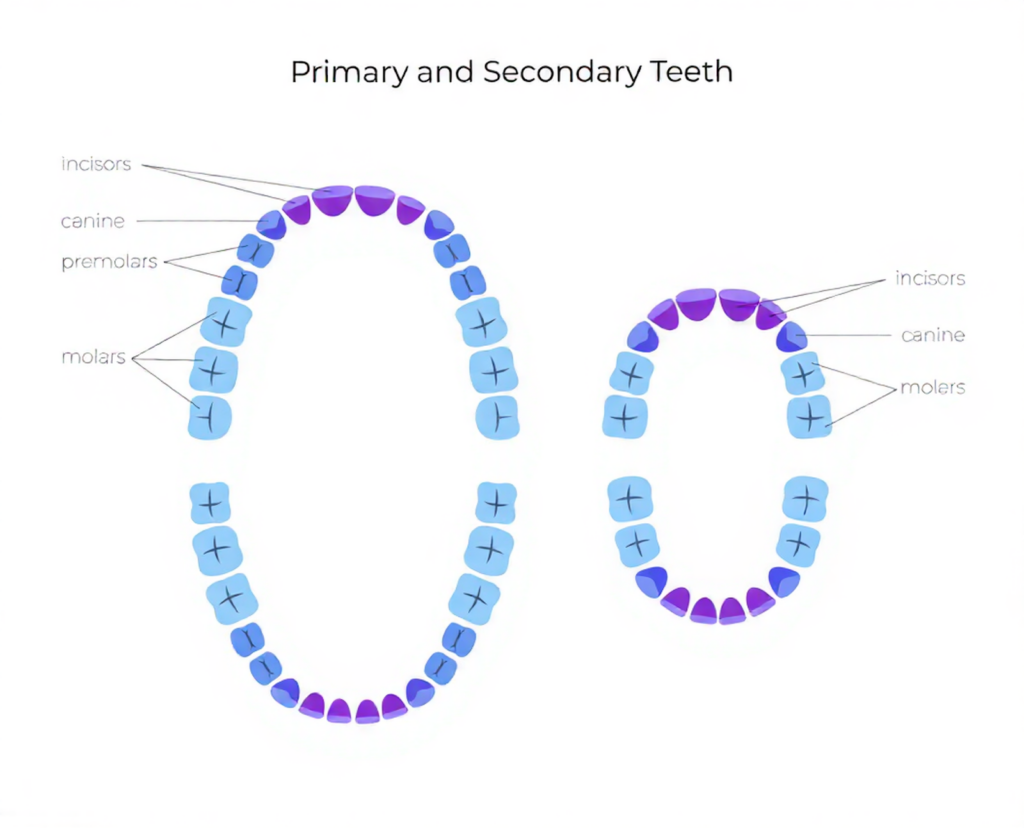
Baby Tooth vs. Permanent Tooth Response
Your response to a chipped tooth depends partly on whether the tooth is primary (baby) or permanent. Children in mixed dentition (typically ages 6 to 12) may have both types, so confirming which tooth was damaged matters.
| FACTOR | BABY TOOTH | PERMANENT TOOTH |
| Replantation if knocked out | Generally not recommended | Attempt within 30 minutes if possible |
| Fragment preservation | Helpful for evaluation | Helpful and sometimes used for bonding |
| Long-term concern | Protecting the developing permanent tooth underneath | Preserving the tooth structure for life |
| Urgency level | Moderate unless pulp is exposed | High for any fracture involving pulp |
In both cases, a pediatric dentist should evaluate the injury. Even a minor chip on a baby tooth can affect the permanent tooth developing below the gum line.
>>> Read more: https://www.vinmec.com/eng/blog/how-to-distinguish-baby-teeth-and-permanent-teeth-en

What to Avoid While Waiting
Well-meaning actions can sometimes make a baby tooth injury worse. While you wait for your appointment, keep these points in mind.
- Do not apply topical pain gels containing benzocaine to a child under two years old. For older children, consult your dentist before use.
- Do not let your child chew on the affected side. Offer soft foods like yogurt, applesauce, or mashed banana instead.
- Do not attempt to file or smooth the chipped edge yourself. Household tools can introduce bacteria or cause further fractures.
- Do not ignore a color change. A tooth that turns gray or dark within hours may indicate internal bleeding or nerve damage.
- Do not use aspirin for pain relief in children. Age-appropriate acetaminophen or ibuprofen at the recommended dosage is a safer option.
>>> Read more: https://health.choc.org/acetaminophen-vs-ibuprofen-a-guide-for-parents/

What the Dentist May Need to Evaluate
When you bring your child in after a chipped baby tooth, the pediatric dentist will likely perform several assessments to determine the right treatment path.
- Periapical or bitewing radiographs (X-rays) to check for root fractures, displacement, or damage to the permanent tooth bud
- Pulp vitality testing to determine whether the nerve inside the tooth is still healthy
- Mobility assessment to grade the degree of looseness on a clinical scale
- Occlusal check to confirm that the bite alignment has not shifted due to the injury
- Soft-tissue evaluation for embedded fragments, lacerations that may need sutures, or signs of infection
Bringing your photos and a clear timeline of the injury helps the dental team at Miles of Little Smiles build a complete picture quickly.
>>> Read more: https://milesoflittlesmiles.com/child-dental-x-ray-white-plains/
When After-Hours Contact Still Matters
CONTACT THE OFFICE AFTER HOURS IF YOU NOTICE ANY OF THE FOLLOWING:
A knocked-out permanent tooth (time-sensitive). Uncontrolled bleeding lasting more than 15 minutes. Signs of jaw fracture such as inability to open or close the mouth. A tooth pushed deeply into the gum (intrusion). Difficulty breathing or swallowing related to the injury.
Most pediatric dental offices, including Miles of Little Smiles, have an after-hours protocol or emergency line. Even if the situation turns out to be minor, describing the chipped baby tooth emergency to a professional gives you clear next steps and peace of mind.

Common Parent Questions
Will a chipped baby tooth heal on its own?
Tooth enamel does not regenerate. A small chip may not require treatment beyond smoothing the edge, but the tooth will not repair itself. A dentist should still examine it to rule out more serious damage.
Should I pull a loose, chipped tooth at home?
No. Pulling a baby tooth prematurely can damage the underlying permanent tooth or cause excessive bleeding. Let the pediatric dentist determine whether extraction is appropriate.
Can my child still play sports after a chipped tooth?
Wait until after the dental evaluation. If the tooth is stable and treated, a custom mouthguard can protect against future baby tooth injuries during physical activity.
How much does an emergency dental visit cost?
Costs vary depending on the evaluation and treatment needed. Call the office to ask about insurance coverage and payment options before your visit.
Need Pediatric Dental Emergency Care?
If your child has a chipped or broken baby tooth, you do not have to figure out the next step alone. The pediatric dental team at Miles of Little Smiles is trained to handle baby tooth injuries in children of all ages, from first teeth through mixed dentition. Whether the chip looks minor or you are worried about exposed pulp, displacement, or persistent pain, we are here to evaluate the injury and walk you through every treatment option.
Call our office today at 914-350-3496 for a same-day emergency evaluation. You can send photos or describe the injury when contacting the office. The sooner we hear from you, the sooner your child gets the care they need. Same-day and after-hours appointments are available for urgent cases.
