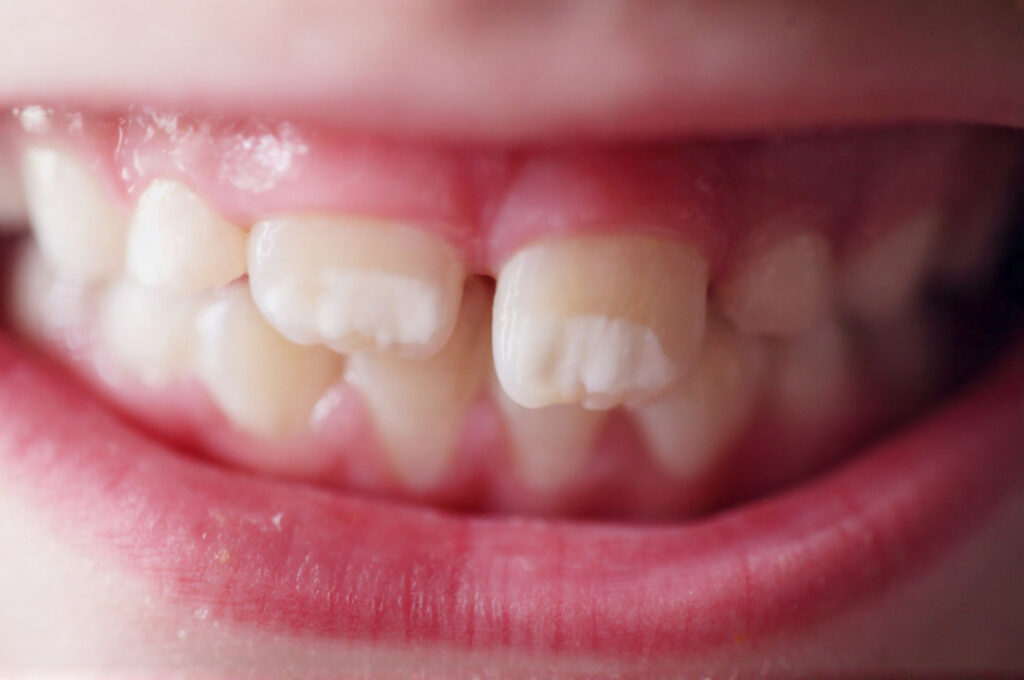
A white spot on a child’s tooth can mean many different things, and the answer depends on details that most parents have never been taught to notice. At Miles of Little Smiles, we help families move past the guesswork by looking at where, when, and how these spots appear before arriving at any conclusion.

The Mistake Parents Make Is Treating All White Spots as the Same Thing
White spots on children’s teeth are not a single condition with a single cause. The term describes a visual finding that can stem from mineral loss, excess fluoride exposure, enamel development disruption, or active early decay, and each of those situations calls for a completely different response.
When parents treat every white mark as a cavity or dismiss every white mark as normal, they risk either unnecessary worry or missed early intervention. The more useful approach is pattern recognition: reading the spot’s location, texture, and behavior over time as a set of connected clues.
>>> Read more: https://www.healthline.com/health/dental-and-oral-health/white-spots-on-teeth#causes

Why Location Is the First Useful Clue
Where the white spot sits on the tooth tells a trained eye a great deal about what caused it. A spot along the gumline carries different implications than one centered on the front surface.
| Location on the tooth | What it often suggests |
| Along the gumline, especially on the upper front teeth | Early cavity white spots caused by plaque accumulation and acid exposure |
| Centered on the smooth front surface, symmetrical across multiple teeth | Fluorosis or a developmental enamel variation |
| On the biting surface or in a pit or groove | Possible hypomineralization during tooth formation |
| Near the edges of a tooth, following a horizontal band | Disruption during a specific stage of enamel development (often linked to illness or fever) |
| On one or two isolated teeth with no pattern | Localized trauma or infection affecting the tooth bud before eruption |
Parents who notice white spots on their toddler’s teeth near the gumline of the upper front teeth should pay close attention. This particular location is one of the most common presentations of early enamel breakdown from bottle feeding or prolonged milk exposure at night.
Why Texture Matters More Than Most Parents Expect
Color alone does not distinguish a harmless enamel variation from an active problem. Texture is often the more reliable indicator.
- Smooth and glassy white spots that blend into the surrounding enamel when the tooth is wet tend to suggest fluorosis or a stable developmental change. These spots formed during tooth development and are not progressing.
- Chalky, matte, or rough white spots that remain visible even when the tooth is wet suggest active mineral loss. A chalky tooth presentation often means the outer enamel layer is becoming porous.
- White spots with a slightly sticky or soft feel when touched gently with a clean fingernail point toward early demineralization that may progress to a cavity without intervention.
- White spots surrounded by a faint brown or yellow border indicate a spot that has been losing mineral content over a longer period and may already be transitioning from demineralization into visible decay.
In a fluorosis vs demineralization child comparison, the texture test is one of the fastest ways to separate the two. Fluorosis spots are hard and stable. Demineralization spots are soft, porous, and actively changing.
>>> Read more: https://www.healthline.com/health/remineralizing-teeth
When White Spots Look More Like Early Enamel Breakdown Than a Cosmetic Variation
Certain patterns suggest that a white spot is not just a harmless mark but an early sign that the enamel is weakening.
- The spot appeared after the tooth erupted, not with it
- It sits in a plaque-prone zone such as the gumline, between two teeth, or around an orthodontic bracket
- It has grown larger, rougher, or more opaque over weeks or months
- The child has risk factors such as frequent snacking, limited brushing access, or mouth breathing that reduces saliva flow
- White lines on kids’ teeth that follow the curve of the gumline across multiple teeth, suggesting a shared acid exposure pattern
When two or more of these signs appear together, the spot is more likely active demineralization than a cosmetic variation, and a dental evaluation should happen sooner rather than later.
When the Pattern Points More Toward Fluorosis or a Developmental Enamel Issue
Not every white spot is a warning sign. Many white marks on children’s teeth are the result of how the enamel formed and are completely stable.
- The spots were present from the moment the tooth came in
- They appear symmetrically on matching teeth (for example, both upper central incisors)
- The surface feels smooth and hard, with no roughness or tackiness
- The spots do not change in size, shape, or opacity over time
- The child had known fluoride exposure during tooth development, such as swallowed toothpaste or high fluoride in the local water supply
These findings point toward fluorosis or enamel hypoplasia rather than active decay. While they may be a cosmetic concern for families, they typically do not require urgent treatment.
>>> Read more: https://www.mouthhealthy.org/all-topics-a-z/fluorosis
Why Baby Teeth and Permanent Teeth Should Not Always Be Interpreted the Same Way
A white spot on a baby tooth and a white spot on a permanent tooth can look identical but carry different levels of urgency and different treatment options.
| Factor | Baby teeth | Permanent teeth |
| Enamel thickness | Thinner, so the breakdown progresses faster | Thicker, allowing more time for remineralization |
| Time in the mouth | Limited lifespan, but decay can still affect the nerve or neighboring teeth | Long-term tooth, so early stabilization has lasting value |
| Remineralization potential | Lower, due to thinner enamel and shorter treatment window | Higher, especially with fluoride varnish and good home care |
| Cosmetic concern | Generally minimal | Often a priority for families once the child is older |
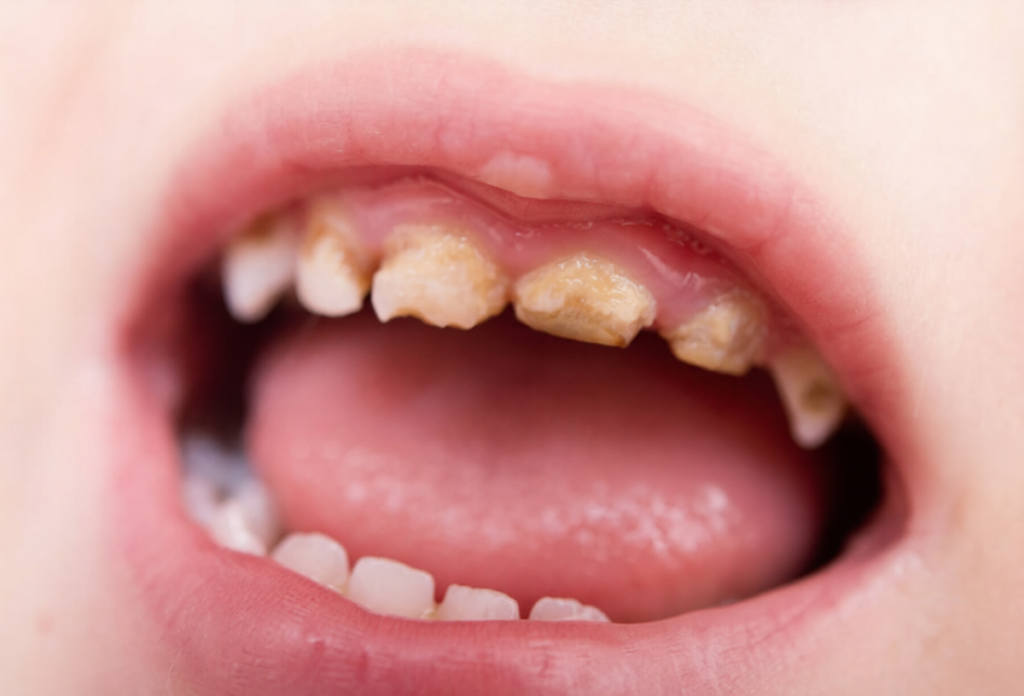
Parents should avoid assuming that white spots on a child’s teeth do not matter simply because the tooth will eventually fall out. Decay in a primary tooth can spread to adjacent teeth and affect the developing permanent tooth underneath.
>>> Read more: https://www.healthychildren.org/English/healthy-living/oral-health/Pages/Fluorosis-Facts-Information-Parents-Caregivers.aspx

What a Dentist Is Deciding: Monitor, Stabilize, or Restore
When a pediatric dentist examines white spots, the decision is not simply “treat or don’t treat.” The clinical process involves categorizing the spot and selecting one of three paths.
- Monitor: The spot is stable, smooth, and not progressing. The dentist documents its size and appearance and rechecks at the next visit.
- Stabilize: The spot shows signs of active mineral loss but has not broken through the enamel surface. Treatment may include fluoride varnish, silver diamine fluoride for early decay, dietary counseling, or adjusted home care routines.
- Restore: The enamel surface has collapsed, creating a physical cavity. At this stage, a filling or other restoration is needed to stop further damage.
Catching a spot in the stabilize stage is the goal, because it means the tooth can often be preserved without drilling.
>>> Read more: https://milesoflittlesmiles.com/fluoride-treatment-for-kids-white-plains/
The Most Useful Photos and Details to Capture Before the Visit
Parents can make the dental visit more productive by gathering a few details in advance.
- Take close-up photos in natural light with the lip gently pulled back to expose the full tooth surface
- Note when you first noticed the spot and whether it has changed
- Record whether the spot appeared before or after the tooth erupted
- List any relevant habits, such as nighttime bottle use, thumb sucking, or fluoride toothpaste swallowing
- Mention any fevers, illnesses, or medications during pregnancy or the child’s first three years, as these can affect enamel formation
These details help the dentist distinguish between fluorosis, hypoplasia, and early decay more quickly and accurately.
Ready to Find Out What Those White Spots Mean?
If the white spots on your child’s teeth are spreading, feel rough, or sit near the gumline, it is worth having them checked before they progress. Miles of Little Smiles offers preventive pediatric dental care designed to catch early enamel changes at the stage where the least intervention does the most good. If silver diamine fluoride for early decay or another conservative approach might help, we will walk you through every option.
Book your child’s exam today and ask whether what you are seeing is early enamel damage or something else entirely.
