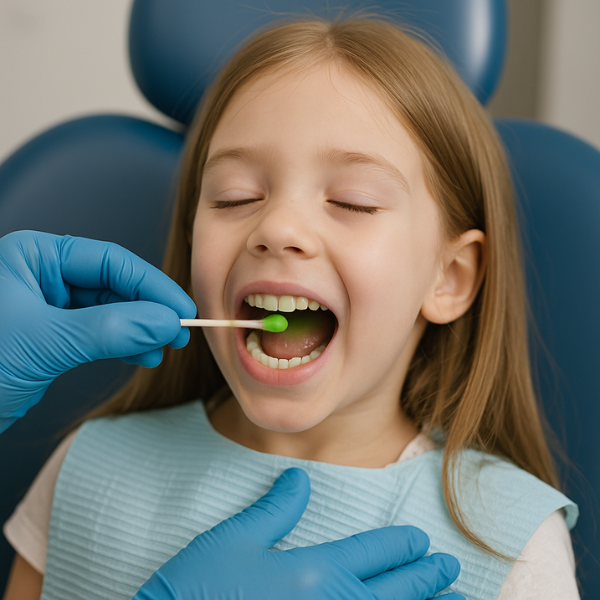
When done by a dentist, fluoride treatment for kids is safe. It helps make enamel stronger, keeps cavities from forming, and lowers the expense of dental care in the long run.
This blog will explain the benefits, safety, science, and typical worries about fluoride therapy for kids. This is especially helpful for families in White Plains who are looking for a reliable pediatric dentist.
Why Fluoride Matters in Children’s Dental Health

The Role of Fluoride in Preventing Cavities
Fluoride is a natural mineral that supports remineralization of tooth enamel, reversing early signs of decay before cavities form. For kids, whose enamel is still developing, fluoride is particularly important.
How Fluoride Strengthens Enamel
Fluoride ions bind to the surface of enamel, making it more resistant to acid attacks from plaque bacteria and sugars. This defense is crucial during the cavity-prone years of early childhood.
What is Fluoride Treatment for Kids?
Professional Fluoride Application
Fluoride treatments in a dental office typically come in the form of a varnish, gel, or foam applied directly to the teeth. These are highly concentrated and more effective than fluoride found in toothpaste or water.
How Often Should Kids Get Fluoride Treatment?
The American Dental Association recommends fluoride treatments every 3–6 months depending on your child’s risk of tooth decay.
Is Fluoride Treatment Safe for Children?

Backed by Decades of Research
Fluoride safety has been studied extensively. When used in recommended doses, fluoride poses no harm and provides significant benefits for dental health.
Understanding Fluorosis
Mild dental fluorosis—caused by excessive fluoride intake during early childhood—is rare with professional treatments. It appears as faint white streaks on teeth but doesn’t affect function.
Local Water Fluoridation in White Plains
White Plains tap water is fluoridated in accordance with public health standards. Your dentist will factor this into treatment recommendations to avoid overexposure.
Addressing Parents’ Common Concerns
Will it hurt?
Fluoride varnish is painless, fast, and non-invasive. It’s simply painted onto the teeth and hardens immediately.
Does my child really need it if they brush?
Even with great brushing habits, children can still develop cavities. Fluoride adds a proven layer of protection, especially in cavity-prone areas like molars.
Are there alternatives to fluoride?
Some natural products claim to strengthen enamel, but none have the same level of clinical evidence as fluoride. Your dentist can discuss personalized options.
What to Expect at Your Child’s Appointment
The Process
- Teeth are cleaned and dried
- Fluoride varnish is applied with a small brush
- Child should avoid eating/drinking for 30 minutes
Duration and Frequency
Each fluoride application takes only 1–2 minutes. Treatments may be repeated every 6 months, or more often if decay risk is high.
Supporting Fluoride Use at Home
Toothpaste
Use a smear (rice-sized) amount of fluoride toothpaste for children under 3, and a pea-sized amount for those aged 3–6. Supervise brushing until they can spit reliably.
Diet and Hydration
Encourage water over sugary drinks and include tooth-friendly foods like cheese, apples, and leafy greens.
Talk to Your Dentist
A dental professional can assess your child’s fluoride needs based on diet, brushing habits, and cavity history.
Conclusion
Fluoride treatment for kids is one of the most effective, affordable, and safe ways to protect young smiles from cavities. For White Plains families, regular fluoride applications—paired with healthy habits—set the stage for lifelong dental health.
Whether you’re a first-time parent or just curious, speaking with your pediatric dentist about fluoride therapy ensures your child gets the care they deserve.
FAQs About Fluoride Treatment for Kids
At what age should kids start fluoride treatment?
Most dentists recommend starting professional fluoride treatment by age 1 or after the first tooth appears.
Is fluoride varnish better than fluoride toothpaste?
Fluoride varnish is stronger and offers targeted protection, while toothpaste is important for daily use. They work best together.
Can too much fluoride harm my child?
Only when consumed in large, continuous quantities. Professionally applied fluoride is safe and carefully measured.
What are signs my child needs fluoride treatment?
Frequent cavities, white spots on teeth, or poor brushing habits are signs your child may benefit from fluoride therapy.
How long does fluoride varnish protect teeth?
It offers several months of protection, especially when combined with good brushing habits and a balanced diet.
