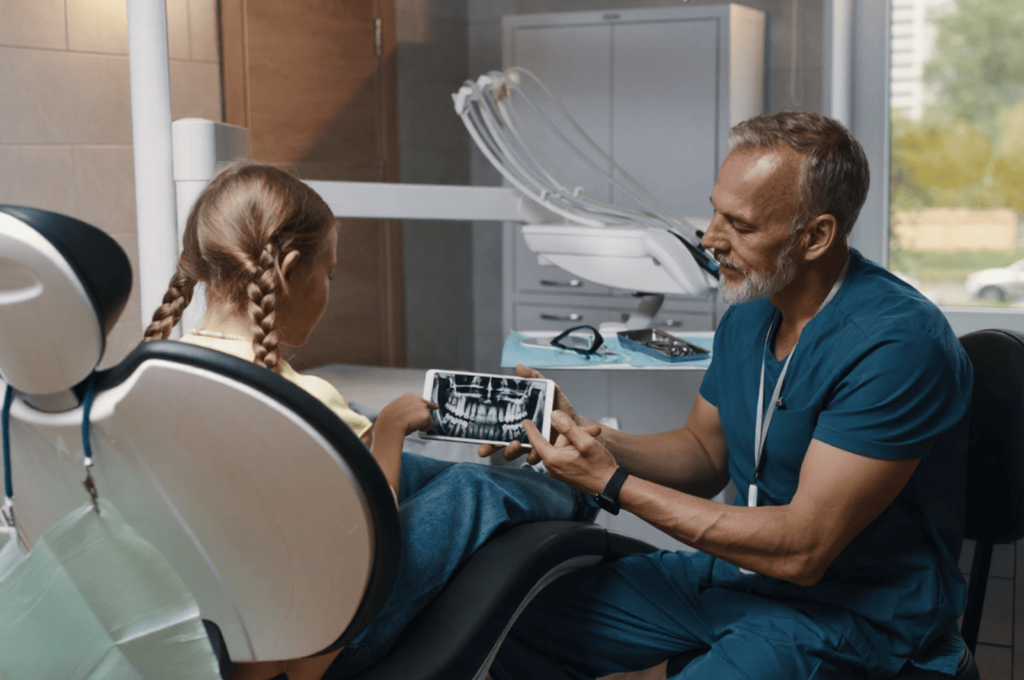
When a pediatric dentist suggests X-rays at your child’s appointment, the first thought is often protective: Is this really necessary for a 3-year-old? It is a fair question. At Miles of Little Smiles, we hear it often, and we believe parents deserve a clear, honest answer rather than a simple “don’t worry about it.” This guide walks through the specific situations where toddler dental X-rays make a difference and the moments when waiting is perfectly reasonable.
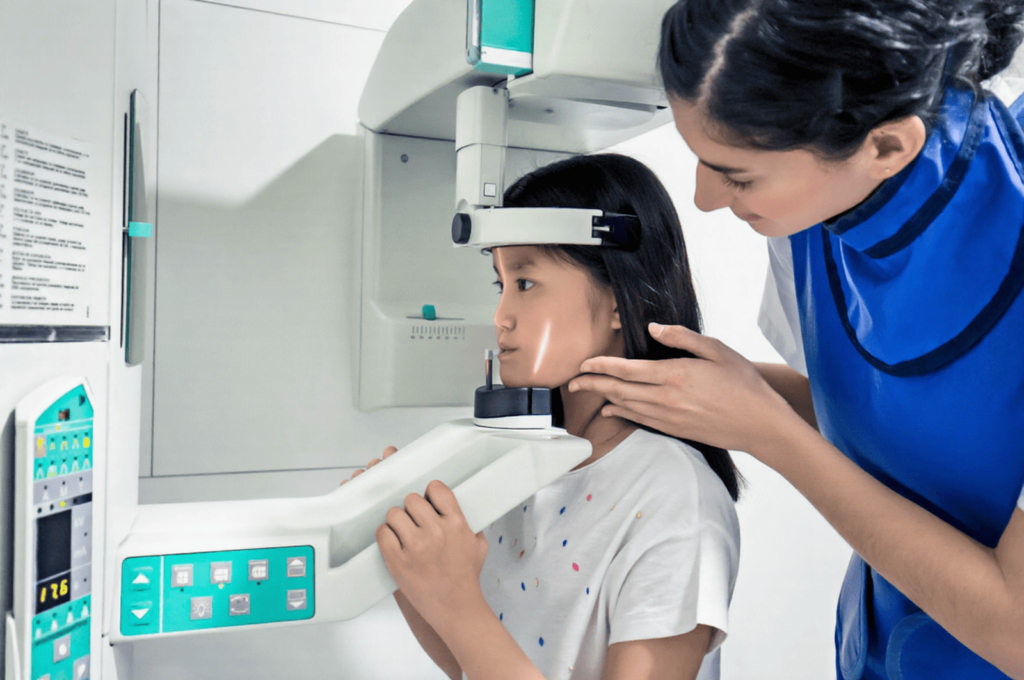
Why Age 3 Feels Confusing
By age 3, most children have a full set of 20 primary teeth. Some of those teeth sit tightly together, especially the molars, while others have visible gaps. Every mouth is different, and that variation is exactly what makes a blanket rule about child dental X-ray safety difficult to apply.
Parents often wonder: ‘Are dental X-rays safe for 3-year-olds if the teeth look fine on the outside?’ The answer depends on what the dentist can and cannot see during a visual exam alone. A healthy-looking surface does not always mean the spaces between teeth or the roots beneath the gumline are problem-free.
When X-Rays May Be Needed: Close Teeth, Symptoms, Injury, Monitoring
Pediatric dentists follow clinical guidelines from the American Academy of Pediatric Dentistry (AAPD). These guidelines recommend imaging based on individual risk factors rather than a fixed schedule by age. Here are common situations where imaging at age 3 may be recommended:
- Teeth that touch tightly
When back molars sit flush against each other, decay can develop in the contact area where no toothbrush or visual exam can reach.
- Visible symptoms
Brown spots, sensitivity to hot or cold foods, swelling near the gumline, or persistent pain all signal that something beneath the surface may need evaluation.
- Dental injury
A fall or bump to the mouth may cause damage to the root or developing permanent tooth bud that is invisible from the outside.
- Monitoring a known condition
If a previous visit identified early enamel weakness or a developmental concern, follow-up imaging helps track changes over time.
>>> Read more: https://milesoflittlesmiles.com/tooth-decay-treatment-for-toddlers/
When the Dentist May Wait
Not every 3-year-old needs X-rays at every visit. Dentists may hold off when a child has wide spacing between all teeth, no signs of decay, no history of trauma, and a low-risk dietary profile. If the child is also unable to cooperate comfortably, the dentist may prefer to wait a few months rather than create a stressful experience that could shape future dental anxiety.
A good rule of thumb: If the result of the X-ray would not change the treatment plan, there is little reason to take one right now.
>>> Read more: https://milesoflittlesmiles.com/child-dental-x-ray-white-plains/
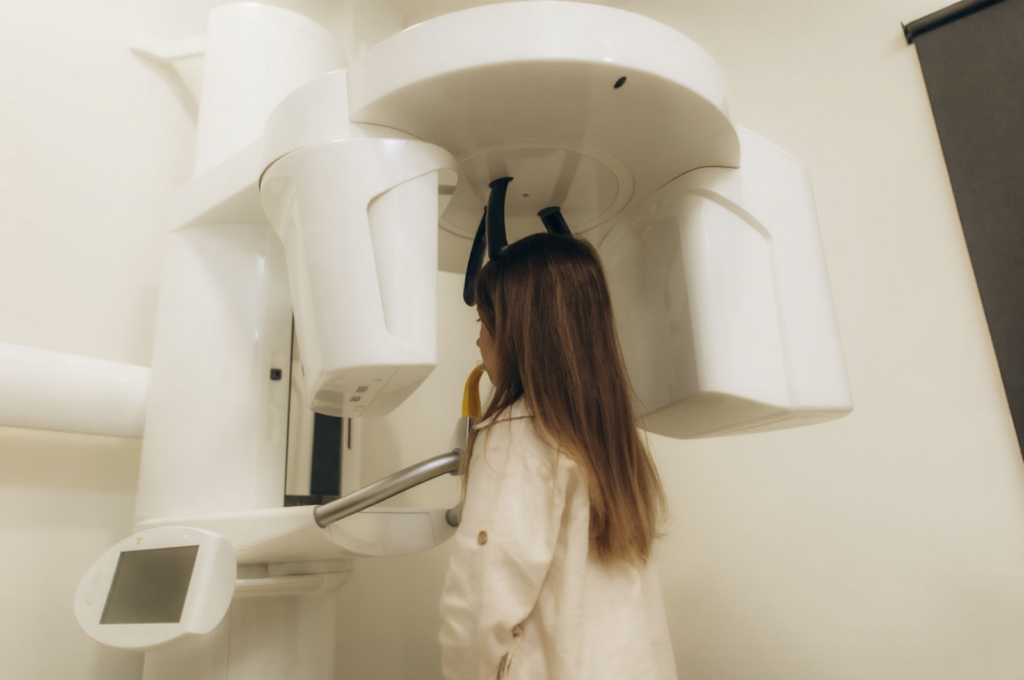
What Parents Really Mean by ‘Safe’
When parents ask whether dental X-rays are safe for kids, the concern usually has two layers: radiation exposure and the emotional experience. Both deserve attention.
| CONCERN | WHAT TO KNOW |
| Radiation dose | A single digital bitewing X-ray exposes a child to roughly 0.001 mSv of radiation, which is less than the background radiation received during a short airplane flight. |
| Digital vs. film | Modern digital sensors used in pediatric offices reduce radiation by up to 80% compared to traditional film X-rays. |
| Lead apron and thyroid collar | Protective shielding is standard practice and minimizes exposure to areas outside the mouth. |
| Emotional comfort | A calm, child-friendly explanation and a patient clinical team reduce fear. The process takes only seconds per image. |
At Miles of Little Smiles, we use digital radiography with the lowest effective dose possible. We also follow the ALARA principle (As Low As Reasonably Achievable), meaning we only recommend imaging when the diagnostic benefit clearly outweighs the minimal risk.
>>> Read more: https://www.lobaydental.ca/benefits-of-digital-radiographs/
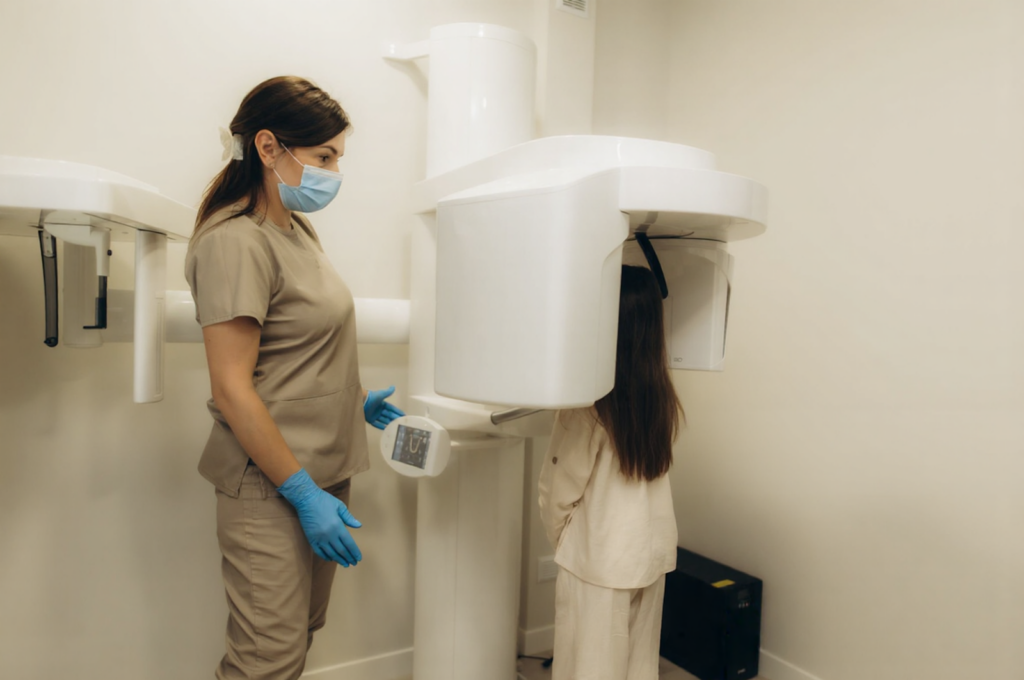
What X-Rays Can Show That Parents Cannot
Even the most attentive parent cannot see what is happening between teeth or below the gumline. Dental X-rays reveal information that a mirror and flashlight simply cannot provide.
- Decay between teeth (interproximal cavities)
These often develop with no visible discoloration on the outer surface.
- Infection or abscess at the root
A child may have an infection beneath a baby tooth without showing obvious swelling or pain.
- Position of developing permanent teeth
X-rays show whether adult teeth are forming correctly and moving into the right position.
- Missing or extra tooth buds
Some children are congenitally missing permanent teeth or have supernumerary (extra) teeth, which can affect future spacing and alignment.
- Bone health
The jawbone around tooth roots can show early signs of treatable conditions when detected early.
Questions to Ask Before Agreeing
Parents should feel comfortable asking their child’s dentist about the specific reasoning behind a recommended X-ray. Here are direct questions worth bringing to the appointment:
- What are you looking for with this X-ray?
- Would it change the treatment plan if we skipped it today?
- Is my child at higher risk for decay based on what you see?
- Can we try again at the next visit if my child is not comfortable?
- What type of imaging equipment do you use, and is it digital?
A pediatric dentist who takes time to answer these kids’ dental X-ray questions openly respects your role in your child’s care decisions.

How to Prepare a Wiggly Child
Three-year-olds are not known for sitting still, and that is perfectly normal. A little preparation at home can make the experience smoother for everyone.
| TIP | WHY IT HELPS |
| Practice “open wide” at home | Familiar movements reduce surprise in the dental chair. |
| Use simple, positive language | Saying “the dentist will take a picture of your teeth” is accurate and non-threatening. |
| Bring a comfort item | A favorite stuffed animal or blanket gives the child something to hold during the process. |
| Schedule morning appointments | Young children tend to be more cooperative earlier in the day before fatigue sets in. |

How Imaging May Prevent Bigger Treatment Later
A small cavity caught early between two molars can often be treated with a minor filling. That same cavity left undetected for another year may reach the nerve, leading to pain, infection, and the potential need for a pulpotomy (a procedure similar to a root canal for baby teeth) or even extraction. Early imaging at the right time can spare your child from more invasive treatment down the road.
The same applies to developmental concerns. If a permanent tooth is growing in at an unusual angle beneath the gum, early detection gives your dentist more options and more time. Waiting until the problem becomes visible in the mouth often means the window for simpler intervention has already closed.
Primary teeth also serve as space holders for permanent teeth. Losing a baby tooth early to untreated decay can lead to crowding and alignment problems that may require orthodontic correction later. A timely X-ray that catches a hidden cavity can protect not only the tooth in question but the spacing plan for the entire arch.
When families ask when kids need dental X-rays, the most accurate answer is: when the clinical signs, tooth anatomy, or history suggest that imaging will reveal something actionable. It is a targeted decision, not a routine checkbox.
Your Child’s Next Step Starts with the Right Questions
If your child is showing symptoms like sensitivity, discoloration, or crowding, or if it has been a while since their last visit, now is a good time to schedule one of their children’s dental checkups.
At Miles of Little Smiles, we are always happy to answer your kids’ questions about dental X-rays before, during, or after any visit. Your comfort matters just as much as your child’s. Call our office today at 914-350-3496 to ask whether imaging is likely to change care at the next appointment.
