
Two children can walk into the same operatory with what looks like the same cavity on an X-ray, and one leaves with a filling while the other needs a crown. If you have ever wondered whether your child actually needs a crown or filling, the answer almost always comes down to what the decay has left behind structurally. At Miles of Little Smiles, we base every recommendation on how much sound tooth structure remains and how long that tooth still needs to function.
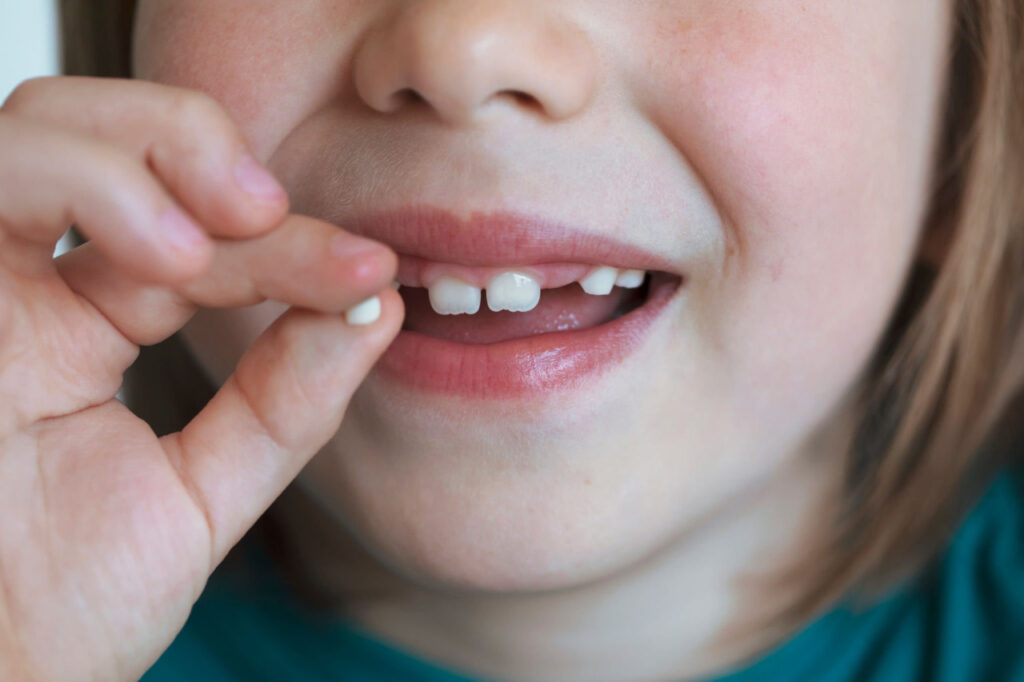
The Decision Is Usually About How Much Healthy Tooth Is Left, Not Just Whether There Is Decay
A cavity tells us that bacteria have broken through the enamel and into dentin. But the size, depth, and location of that breakdown vary enormously from one child to the next. The clinical question is not “Is there a cavity?” but rather “After we remove all the decay, will the remaining walls of the tooth be strong enough to hold a filling for the years this tooth still needs to stay in the mouth?”
When a baby tooth crown vs filling decision comes up, your pediatric dentist is evaluating several factors at once:
- Number of surfaces involved
A cavity on one surface behaves very differently from decay that wraps around two or three surfaces.
- Proximity to the nerve
Deeper cavities may require pulpotomy treatment for children before any restoration is placed.
- Remaining wall thickness
Thin walls crack under chewing forces, especially in baby molars.
- Time until natural exfoliation
A tooth that needs to last four more years faces different demands than one that is already loose.
>>> Read more: https://milesoflittlesmiles.com/everything-you-need-to-know-about-pulpotomies/

When a Filling Is Still a Reasonable Long-Term Option
Fillings work well when the cavity is small to moderate and confined to one or two surfaces. In these cases, enough healthy dentin and enamel surround the restoration to absorb normal biting pressure without fracturing.
A filling is typically a good fit when:
- The cavity is caught early through routine X-rays
- Decay has not reached the pulp chamber
- At least three of the four walls of the tooth remain intact
- The tooth does not bear an unusually heavy occlusal load
For a large cavity in a baby tooth that still meets these conditions, a well-placed composite or glass ionomer filling can last comfortably until the tooth is ready to fall out on its own.
Why Large Fillings Tend to Fail Faster in Baby Molars
Baby teeth are structurally different from permanent teeth. The enamel is thinner, the dentin is softer, and the pulp chamber sits closer to the outer surface. These differences mean that a filling occupying more than half the tooth’s width has less supporting structure around it than the same filling would in an adult molar.
| Factor | Baby Molar | Permanent Molar |
| Enamel thickness | Approximately 1 mm | Approximately 2.5 mm |
| Dentin hardness | Softer, more porous | Denser, more mineralized |
| Pulp chamber size | Proportionally larger | Proportionally smaller |
| Typical years of service needed | 2 to 8 years | Decades |
When a filling is too large relative to what remains, the thin walls flex during chewing. Over months, microcracks form, and the tooth can split. A fractured baby molar often becomes unrestorable, turning a situation that could have been managed with a stainless steel crown into an extraction.
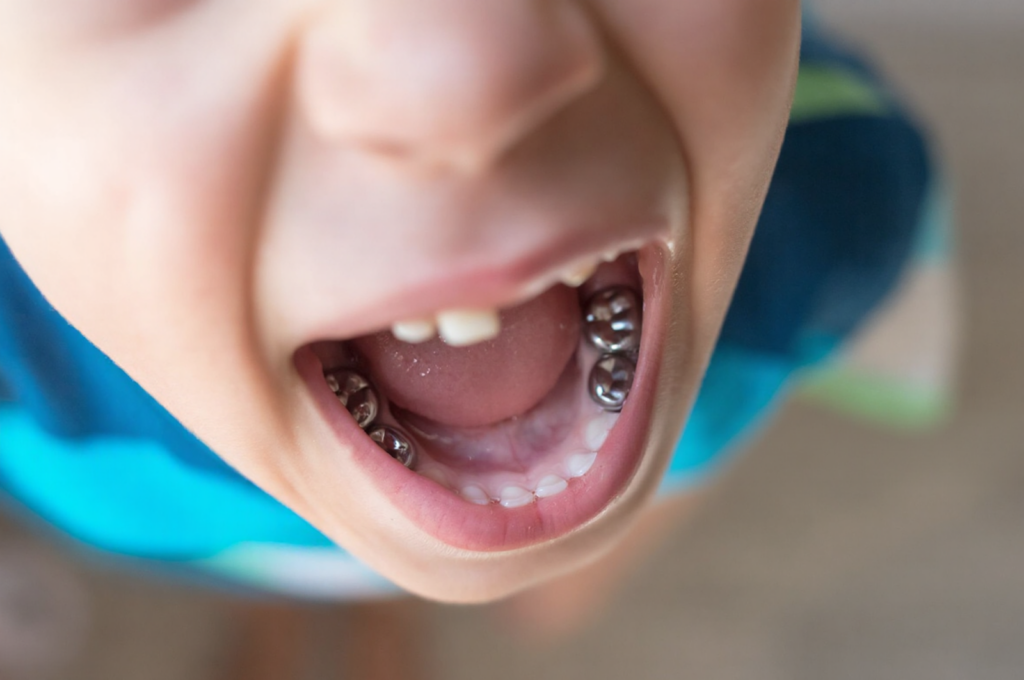
When a Crown Is Actually the More Conservative Choice
This is the part that surprises most parents. A stainless steel crown for kids sounds like a bigger procedure, but it often preserves more tooth structure over time than repeated filling replacements would. The crown wraps around the entire tooth, holding weakened walls together and distributing chewing forces evenly.
A pediatric crown in White Plains or any clinical setting is generally recommended when:
- Decay involves three or more surfaces
- The tooth has undergone pulpotomy treatment for children and needs full-coverage protection afterward
- A previous filling has already failed or fractured
- The tooth must remain functional for three or more years before it naturally falls out
By covering the tooth completely, the crown eliminates the risk of wall fracture and drastically reduces the chance of recurrent decay along filling margins.
Why a Baby Tooth Can Still Be Worth Saving Even Though It Will Fall Out Eventually
Baby molars hold space for the premolars developing beneath them. When a baby molar is lost too early, neighboring teeth drift into the gap. This crowding can redirect the path of the permanent tooth, sometimes leading to impaction or the need for orthodontic correction later.
Saving a baby tooth with a crown is not about sentimentality. It is about maintaining the arch length and guiding the permanent dentition into proper alignment. The cost and effort of a single crown are often far less than the orthodontic consequences of premature tooth loss.
>>> Read more: https://teachmeanatomy.info/head/organs/mouth/child-adult-dentition/

When Extraction Becomes Part of the Conversation
There are situations where neither a filling nor a crown will produce a predictable outcome. If decay has destroyed the tooth below the gumline, if there is a large abscess that has not responded to treatment, or if the permanent tooth is already close to erupting, extraction may be the most responsible recommendation.
After an extraction, a space maintainer is usually placed to prevent drift. Your dentist at Miles of Little Smiles will explain the timeline and whether the permanent successor is far enough along in development to fill the gap on schedule.
How to Think About the Tradeoff
Parents often frame the decision as “filling versus crown,” but the real comparison is about long-term predictability.
| Scenario | Filling Predictability | Crown Predictability |
| Small, single-surface cavity | High | Unnecessary |
| Moderate two-surface cavity | Moderate to high | High |
| Large cavity spanning three surfaces | Low to moderate | High |
| Post-pulpotomy restoration | Low | High |
| Tooth needed for less than one year | Often sufficient | May not be worth the procedure |
When does a child need a dental crown? Generally, when the predictability of a filling drops below what is acceptable for the remaining lifespan of that tooth.

Questions to Ask if the Crown Recommendation Feels Bigger than Expected
If your dentist recommends a crown and you want to understand the reasoning more fully, these questions can help guide the conversation:
- How many surfaces of the tooth are affected by decay?
- Would a filling be likely to last until this tooth falls out naturally?
- Is pulpotomy treatment for children part of the plan, and if so, why does that change the restoration choice?
- What happens if we choose a filling and it fails in a year or two?
- How close is the permanent tooth to erupting?
A good pediatric dentist will welcome these questions and walk you through the X-rays so you can see exactly what they see.
>>> Read more: https://milesoflittlesmiles.com/child-dental-x-ray-white-plains/
Ready to Find Out What Your Child Actually Needs?
If you are weighing whether your child needs pediatric dental crowns or a simpler restoration, the best next step is a restorative consultation. At Miles of Little Smiles, we will show you the X-rays, explain how much tooth structure remains, and help you understand whether a filling would be predictable enough or whether a crown would give your child a better outcome.
If your child needs pulpotomy treatment for children as part of the plan, we will walk through every step so you know exactly what to expect.
Book a restorative consult today to find out how long the tooth needs to last and which option gives it the best chance of staying healthy until it is ready to come out on its own.
