
When a child loses a baby tooth too early, the first question most parents ask is simple: does my child need a space maintainer? The answer depends on more than just the gap itself. At Miles of Little Smiles, our pediatric dental team evaluates each case based on which tooth was lost, how close the permanent replacement is to erupting, and how likely neighboring teeth are to shift. This guide walks through the clinical reasoning behind that decision so you can understand what your child actually needs.
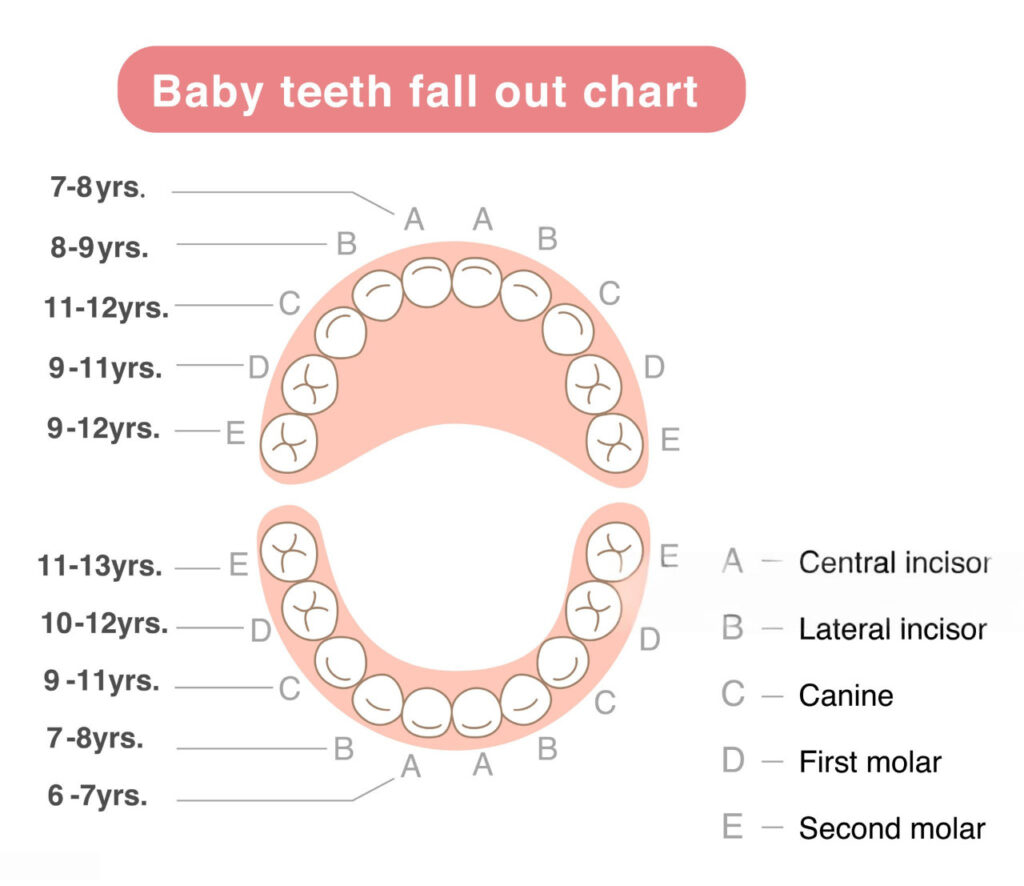
Early Primary Tooth Loss Is Only the Starting Point: Why the Specific Tooth Matters
Not every missing baby tooth carries the same risk of space loss. The location of the tooth in the arch plays a direct role in whether adjacent teeth will drift, tilt, or remain stable.
Risk levels by tooth type:
| Tooth Lost Early | Space Loss Risk | Typical Recommendation |
| Upper front incisor | Low | Monitoring in most cases |
| Lower front incisor | Low | Monitoring in most cases |
| First primary molar | Moderate to High | Space maintainer often recommended |
| Second primary molar | High | Space maintainer strongly recommended |
| Primary canine | Moderate | Case-by-case evaluation |
When a child loses a second primary molar well before the permanent premolar is ready to come in, the six-year molar behind it tends to drift forward. That forward movement can block the premolar from erupting in its correct position. Front teeth, by contrast, rarely cause the same degree of shifting because the forces acting on them are different.
This is why a lost baby tooth too early in the back of the mouth triggers a very different clinical response than one lost in the front.
>>> Read more: https://milesoflittlesmiles.com/baby-teeth-timeline-when-they-fall-out-and-complications/
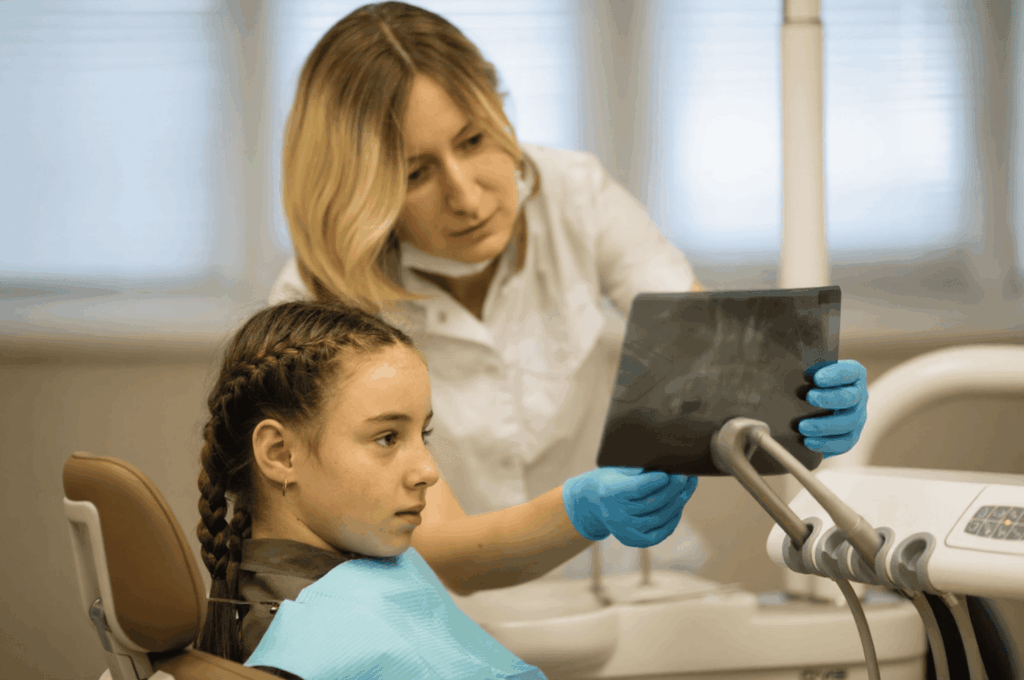
The Factor Parents Often Cannot See: Proximity of the Permanent Tooth
A dental X-ray reveals something no visual exam can show: how far along the permanent tooth is in its development beneath the gum. If the replacement tooth has already formed most of its root and is close to breaking through, the window for space loss is small. In that situation, monitoring alone may be perfectly safe.
>>> Read more: https://milesoflittlesmiles.com/child-dental-x-ray-white-plains/
However, if the permanent tooth is still high in the bone with minimal root formation, months or even years may pass before eruption. During that time, neighboring teeth can migrate into the open space.
Factors your dentist evaluates on X-ray:
- Stage of root development of the permanent successor
- Distance between the developing tooth and the gum surface
- Bone density and any pathology around the site
- Whether adjacent teeth are already beginning to tilt
How Waiting Can Quietly Complicate Orthodontic Issues Later
Space loss does not happen overnight. It occurs gradually, often without any visible symptoms until the permanent tooth has nowhere to go. By the time parents notice crowding or a tooth erupting out of alignment, the problem may require orthodontic treatment that could have been prevented.
A space maintainer after baby tooth extraction holds the position open so the permanent tooth can erupt without obstruction. Skipping this step when it is clinically indicated can lead to impaction, crossbite development, or the need for serial extraction later in the mixed dentition stage.
>>> Read more: https://my.clevelandclinic.org/health/treatments/24601-teeth-braces

Does the Approach Change if the Tooth Was Removed Due to Decay Versus Trauma?
The cause of early tooth loss does influence the treatment plan, though not always in the way parents expect.
- Decay-related extraction
If a tooth was removed because of infection or advanced decay, the surrounding bone may have been compromised. Your dentist will assess whether healing is adequate before placing an appliance.
- Traumatic loss
A knocked-out baby tooth may leave the socket and bone intact, but the dentist will check for damage to the developing permanent tooth underneath. In some trauma cases, the permanent tooth bud can be displaced or injured.
>>> Read more: https://milesoflittlesmiles.com/chipped-baby-tooth-first-30-minutes/
- Resorption or natural shedding too early
Occasionally a baby tooth is lost ahead of schedule due to abnormal root resorption. This can signal an ectopic eruption path for the permanent tooth, which changes the treatment plan entirely.
Regardless of the cause, the question remains the same: is there enough time and space risk to justify placement of a space maintainer, or can your child be monitored safely until the permanent tooth arrives?

Clinical Criteria Used by Pediatric Dentists for Decision-Making
Pediatric dentists do not rely on a single factor when deciding between a space maintainer and observation. The decision follows a set of clinical criteria applied to each individual case.
Decision checklist used in practice:
- Which tooth was lost and its position in the dental arch
- The child’s current age versus expected eruption timeline
- Radiographic assessment of the permanent successor
- Amount of space currently available versus space needed
- Status of adjacent and opposing teeth
- The child’s overall dental development pattern
- Whether the child has existing crowding or spacing tendencies
When multiple risk factors align, such as a young child losing a second primary molar with a distant permanent successor, the recommendation for a space maintainer becomes straightforward.
What Parents Need to Know When a Space Maintainer Is Recommended
If your pediatric dentist recommends a space maintainer, here is what to expect:
- Types of appliances
The most common are band-and-loop maintainers for single-tooth spaces and lingual arches for bilateral space preservation.
- Placement process
The appliance is fitted after the extraction site has healed, typically within a few weeks. Impressions or digital scans are taken to create a custom fit.
- Ongoing care
Your child will need periodic checkups so the dentist can monitor the appliance and track the permanent tooth’s progress. The maintainer is removed once the permanent tooth begins to erupt.
- Comfort
Most children adjust to the appliance within a few days. It should not cause pain, and your child can eat normally with minor dietary precautions.
When to Call the Dentist Sooner Instead of Waiting for a Routine Recall
Certain situations call for a visit before the next scheduled appointment. Contact your child’s dentist promptly if:
- A baby tooth is knocked out or falls out unexpectedly before age five
- You notice adjacent teeth tilting or shifting into a gap
- A permanent tooth appears to be coming in crooked or in the wrong location
- Your child had a tooth extraction for children due to decay and the healing site looks abnormal
- The space maintainer loosens, breaks, or causes discomfort
Early intervention gives your dentist the best chance to preserve space and prevent complications that become harder to correct with time.
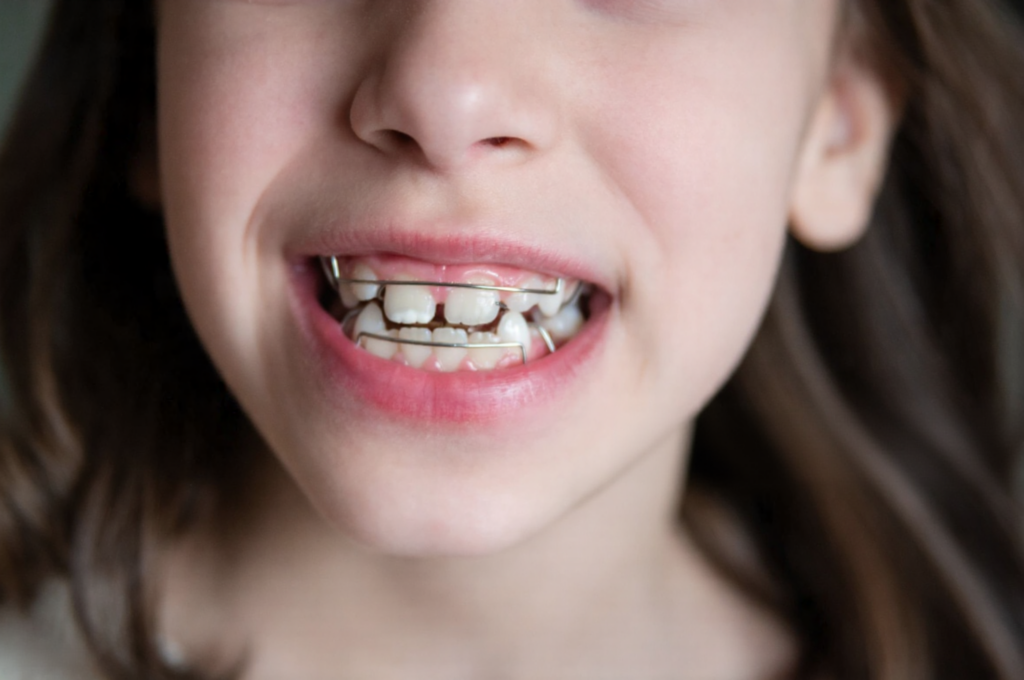
Beyond Necessity: The Long-Term Costs of Not Using a Space Maintainer
The financial and clinical costs of skipping a space maintainer when one is needed can be significant. Orthodontic treatment to correct crowding, impacted teeth, or crossbites often costs several thousand dollars and requires months or years of active care. A space maintainer, by comparison, is a relatively simple and affordable preventive measure.
Beyond cost, there is the matter of your child’s comfort and confidence. Teeth that erupt properly into an open, preserved space tend to require less intervention down the road.
H2: Schedule a Space Evaluation at Miles of Little Smiles
If your child lost a baby tooth early, whether from decay, trauma, or unexpected shedding, the team at Miles of Little Smiles in White Plains can determine exactly what your child needs. Our pediatric dentists specialize in space maintainers for kids and provide clear recommendations based on your child’s specific anatomy and eruption timeline.
Ask whether monitoring is safe in your child’s specific case or whether waiting creates real risk. Schedule an evaluation after early tooth loss so your child’s permanent teeth have the best path forward.Call our White Plains office today to request an appointment.
